A Jungian Analysis of Star Wars

In 1977 George Lucas’ Star Wars was released in cinemas and is now recognised as one of the most successful and influential franchises in motion picture history. One of the reasons for Lucas’ success was his ability to tell a story that is both familiar and at the same time completely new. He did this by using common themes that occur throughout history and across cultures in a story that was set “a long time ago in a galaxy far, far away”.
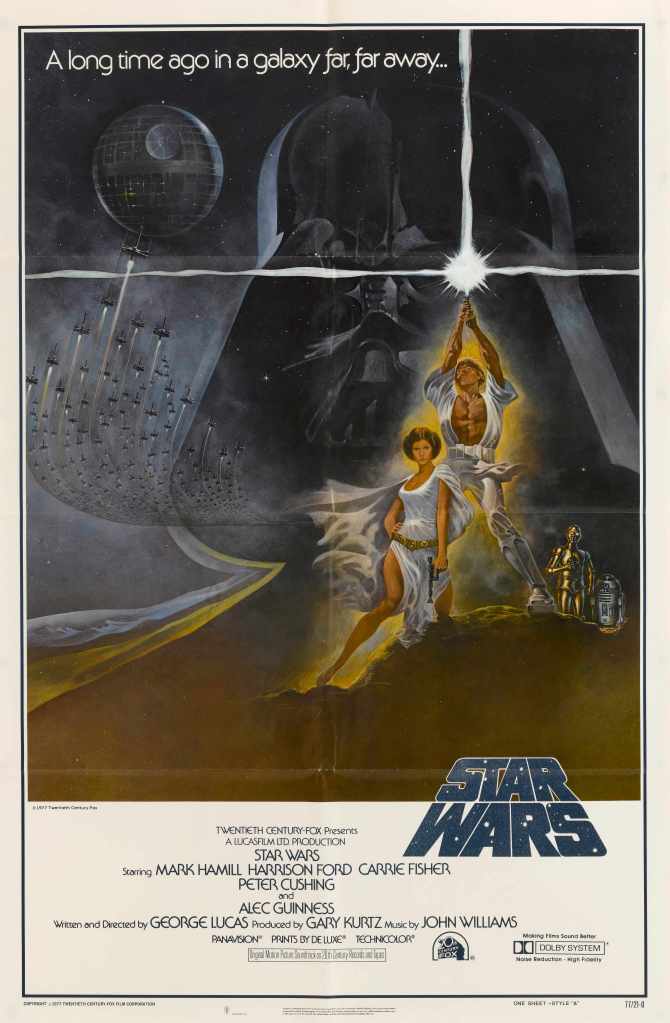
A poster for George Lucas’ 1977 fantasy film ‘Star Wars’ starring Mark Hamill and Carrie Fisher.

At this point, you might be confused about how the subjects of the Swiss psychiatrist Carl Jung and Star Wars overlap… well; Carl Jung was a huge influence on Joseph Campbell, who went on to influence George Lucas.

Knowing this we can examine the common themes through the eyes of Carl Jung, who would refer to them as archetypes. Jung believed that these archetypes existed in our unconscious and by learning to integrate our conscious mind and unconscious mind we gain clarity of who we are. He would also relate the issues of his patients to mythologies in order to get a better understanding, meaning in reverse we can use analytical psychology to get a better understanding of modern mythologies, such as Star Wars.

If we focus on the original trilogy, the most obvious archetype is ‘The Hero’, found in our protagonist Luke Skywalker. I’m sure we’ve all heard stories of the brave hero that slays the dragon and rescues the princess. Luke’s quest could be transferred onto pretty much any hero you’ve ever heard of.

The second archetype, ‘The Shadow’ appears in both Luke’s companion Han Solo, and his estranged father Darth Vader. The shadow is the part of our unconscious that embodies all of our most undesirable traits, and until we learn to integrate them into our day to day life we will never be complete. Han is shown as Luke’s shadow through his arrogance, his ability as a fighter and worldliness; whereas the protagonist starts his journey as an unassuming, naive young man who can’t fight. Although in the case of Darth Vader, the antagonist, we can see a much harsher, angrier and animalistic figure with a lot of similarities to Luke.

Darth Vader is also a great example of what happens when you try to run from ‘The Shadow’, as he was once a good man who wanted to do nothing but protect the love of his life in a way that he couldn’t protect his mother. This eventually drove him to darkness, resulting in him murdering the woman he only wanted to protect (as well as loads of little kids in a temple).

Side note: the connection between Darth Vaders mother and his lover could be explained by Sigmund Freud’s Oedipus complex. The collaborator of Carl Jung believed that all men wanted to have sex with their mothers and kill their fathers… which in a way he kind of did if you blame his immaculate conception on ‘The Force’.

Back to business; the second archetype is ‘The Anima/Animus’, which can be seen in Star Wars through Princess Leia. This archetype differs depending on your gender; if you are a man you have an Anima that represents your feminine side, and if you are a woman you have an Animus that represents your masculine side. This archetype is often seen at first as an object of sexual desire; but you accept the Anima as a guide, and in the case of Luke his twin sister (disgusting I know), you become a step closer to your goal.

Leia works as a guide to Luke to assist him on his journey to find another archetype which is ‘The Senex’, characters that often take the form of an old man and play the role of a teacher. With the help of Leia, Luke finds his teacher in Obi-Wan and eventually Yoda.

By learning to embrace all of these archetypes Luke becomes a ‘Jedi Master’ and puts an end to ‘The Empire’. This is a metaphor for unification between the conscious and unconscious mind.

It’s important to keep in mind that Jung believed that there are as many archetypes as there are situations in life, so it would be impossible for a series of films to cover all of them.

Zapata-style Landscape

At the start of the 20th century; European superiority was still asserted throughout the art world, and especially for artists in Mexico. Throughout Latin America, artists were trained to abide by the rules of realism while in Europe artists were developing more modern styles. The Eurocentric outlook of Mexican art institutions would have restricted the local artists from developing their own style.

The limitations that Diego Rivera would have felt through his training is no doubt what fuelled his ambitions of success in Europe. After being granted a scholarship to continue his art studies in Europe, Rivera would take his skills to Spain and then France where he would meet Pablo Picasso.

While in Paris, Rivera worked closely with Picasso which led to him spending a period of his career creating works in a Cubist style.

Zapata-style Landscape, by Diego Rivera. 1915. (125 x 145cm)

The Zapata-style Landscape (1915) shows the rebellious nature of Rivera which he clearly transfers into his art, experimenting with new styles rather than sticking to realism. This can also be seen in Rivera’s choice of name for this artwork; the artist named this piece after the main leader of the peasant revolution in the Mexican state of Morelos, Emiliano Zapata Salazar. His focus on the Mexican Revolution can also be seen through the artists inclusion of a rifle.

Looking closely at the Zapata-style Landscape you can see that the concentration on Mexican themes does not stop with the choice in name or style. The focus on Mexican culture can be seen in his incorporation of a sombrero, but most importantly the serape. The serapes inclusion of Mayan motifs showcases Mexico’s rich history before colonisation.

Something that should not be overlooked is the fact that this piece is a Latin American landscape. While the landscape genre of painting had been disregarded in Europe for centuries, its popularity was revived by the untamed scenes of the Americas. These artworks would eventually be mass produced for Europeans that were interested in the colonies. Rivera plays on this by adding stylised volcanoes in the background, suggestive of the Valley of Mexico.

In conclusion, even though Rivera’s Cubist period was short lived, it had a visible impact on the work he would produce from that point onwards. He would eventually leave Europe and return home to become one of the founding members of Mexican Muralism.

Picasso’s Blue Period

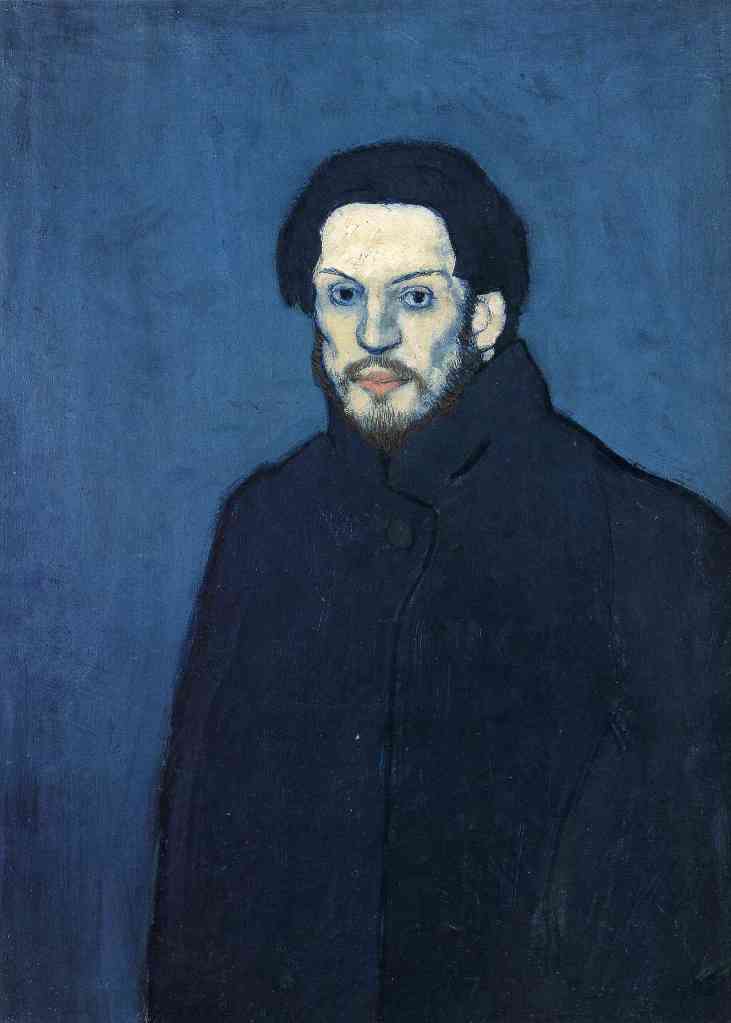
Throughout Picasso’s lifetime, the artist’s style was constantly evolving, although one of the most important phases of his career came after the death of his friend Carles Casagemas. This early stage of Picasso’s artistic development was so significant that he named it, the ‘blue period’ that would dominate his work for three years starting in 1901.

Self-Portrait, by Pablo Picasso. 1901.

At the tender age of 19 years old Picasso moved to Paris, which would have been the centre of the art world at the time. He was accompanied by his friend Casagemas, who was an artist himself.

While in Paris, Casagemas would fall in love with a young woman called Germaine, although she did not feel the same. On February 17th 1901, while Picasso was in Barcelona; Casagemas hosted a party, inviting many of his friends as well as Germaine. That night he would deliver a speech before asking for Germaine’s hand in marriage. Germaine rejected his proposal which drove him to pull out a pistol, shooting her and then himself. Although Germaine survived the attack, it would result in the death of Casagemas and the start of Picasso’s blue period.

Picasso’s use of blue as a way of providing relief from the emotions he felt after the death of his friend in an extremely depressing way. Throughout this period he focused on several different subjects although they always focused on themes like disparity, loneliness, poverty, old age and death.

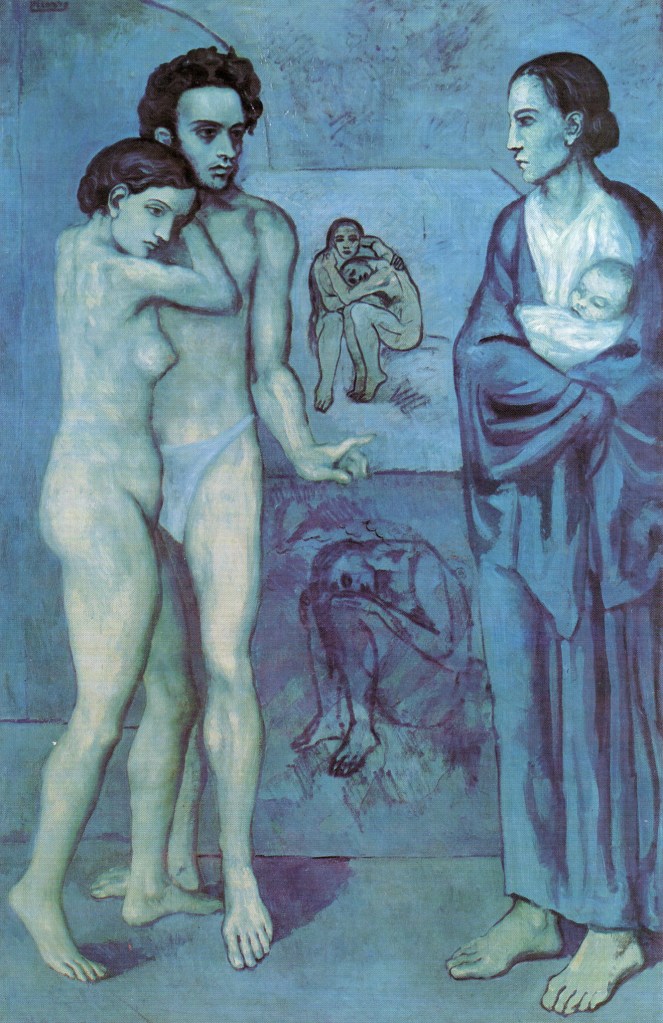
La Vie, by Pablo Picasso. 1903.

One of the artworks that are most significant in representing this period of Picasso’s career is La Vie (1903). This piece shows Casagemas and Germaine, naked and cuddling. If you look at Casagemas’ left hand you can see that he is doing a gesture; this gesture is a religious symbol that refers to a quote from Jesus Christ after his resurrection, ‘Noli me tangere’. This can be translated to ‘touch me not’ or ‘stop clinging to me’, which could be interpreted as the young man telling Picasso that it was time to move on with his life.

Contrapposto

Contrapposto is a term that is commonly used in the visual arts to describe the way that the human figure is depicted when putting most of its weight on one foot, creating the impression of movement. Even though the phrase is the Italian translation for the word ‘counterpoise’, the technique has been used since the 5th century BC in Ancient Greece.

David, by Michelangelo. 1501-1504. Dimensions: 517 x 199cm (17 x 6.5ft). Location: Galleria dell’Accademia, Florence, Italy.

The style was further developed throughout the Hellenistic and Imperial Roman periods; although there is not a lot of evidence of its use during the middle ages, the technique was eventually revived during the Renaissance period. One of the most famous statues in art history and examples of contrapposto is Michelangelo’s statue of David. The statue shows the biblical character in a different way to usual; most artists show David in a way that would celebrate his victory over the Goliath, although this portrayal of him gives the impression that he is tense and ready for battle after making the decision to battle the giant.

Chiaroscuro

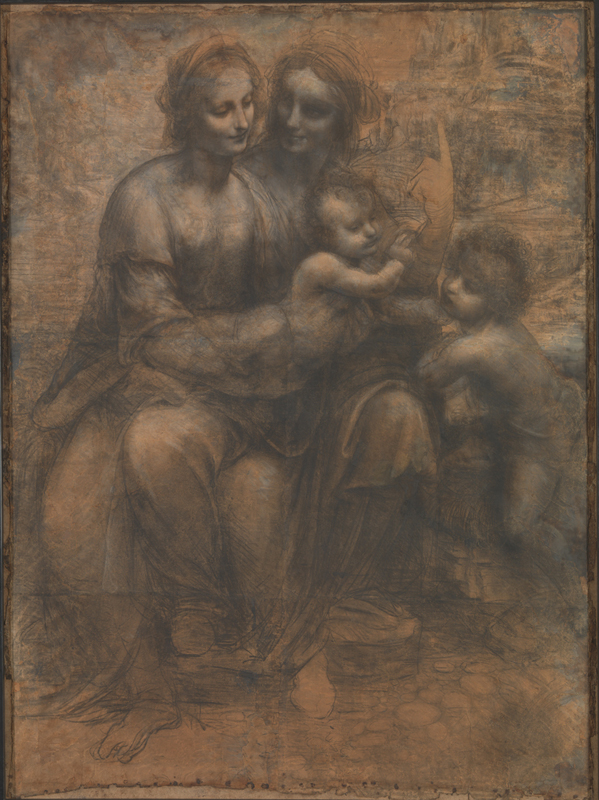
Chiaroscuro is an Italian phrase that translates to English as ‘light and dark’, and describes the use of shading to create a sense of volume for three-dimensional objects and figures. The use of this term in art history originates in the renaissance period, and would be further developed by artists such as Leonardo da Vinci, Caravaggio and Rembrandt.

Leonardo da Vinci, 1452 – 1519 The Virgin and Child with Saint Anne and the Infant Saint John the Baptist (‘The Burlington House Cartoon’) about 1499-1500 Charcoal (and wash?) heightened with white chalk on paper, mounted on canvas, 141.5 x 104.6 cm

Throughout the sixteenth century this method became increasingly popular and was adopted by most artists; as time went on and the technique evolved, new styles like tenebrism were born. Tenebrism uses dramatic chiaroscuro as a dominant stylistic device; after the Caravaggio’s development of the technique, it would become increasingly popular in Spain and the Spanish-ruled kingdom of Naples.

Chiaroscuro is mainly known for becoming an essential aspect of drawing, painting and printmaking over the past 500 years; although the technique is still used to this day in more modern mediums like cinema and photography. One classic example of chiaroscuro in cinematography is Nosferatu (1922); a silent German Expressionist horror film that is commonly referred to as an influential masterpiece of cinema.

Using this technique in cinema allows the viewer to focus on the main figure in the scene, which in this case is ‘Count Orlok’. Films from the silent period would be dependent on only the visual aspect, which would have to find ways to convey information that today we would expect to be given to us through dialogue, making the use of lighting to set the eerie tone even more important.

Ugolino and His Sons

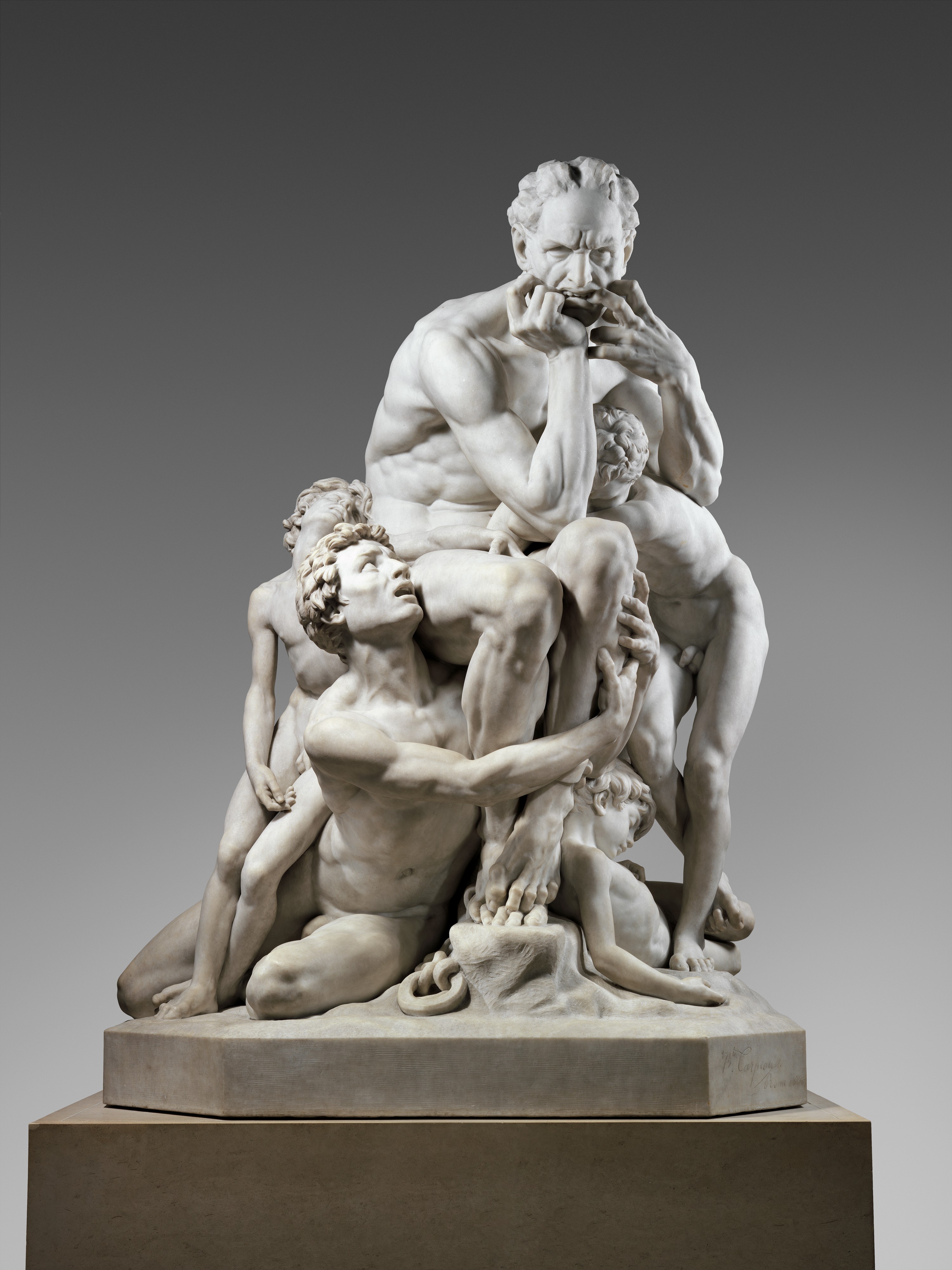
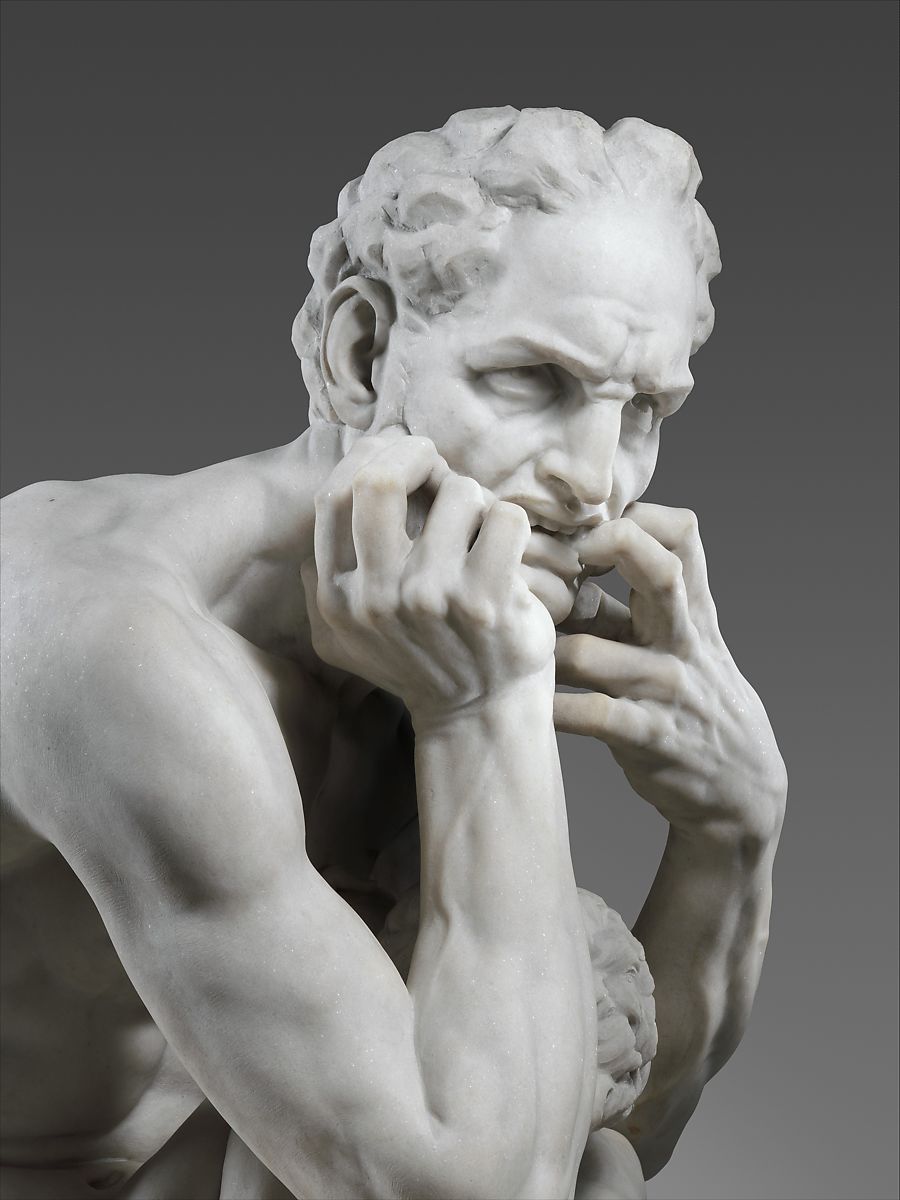
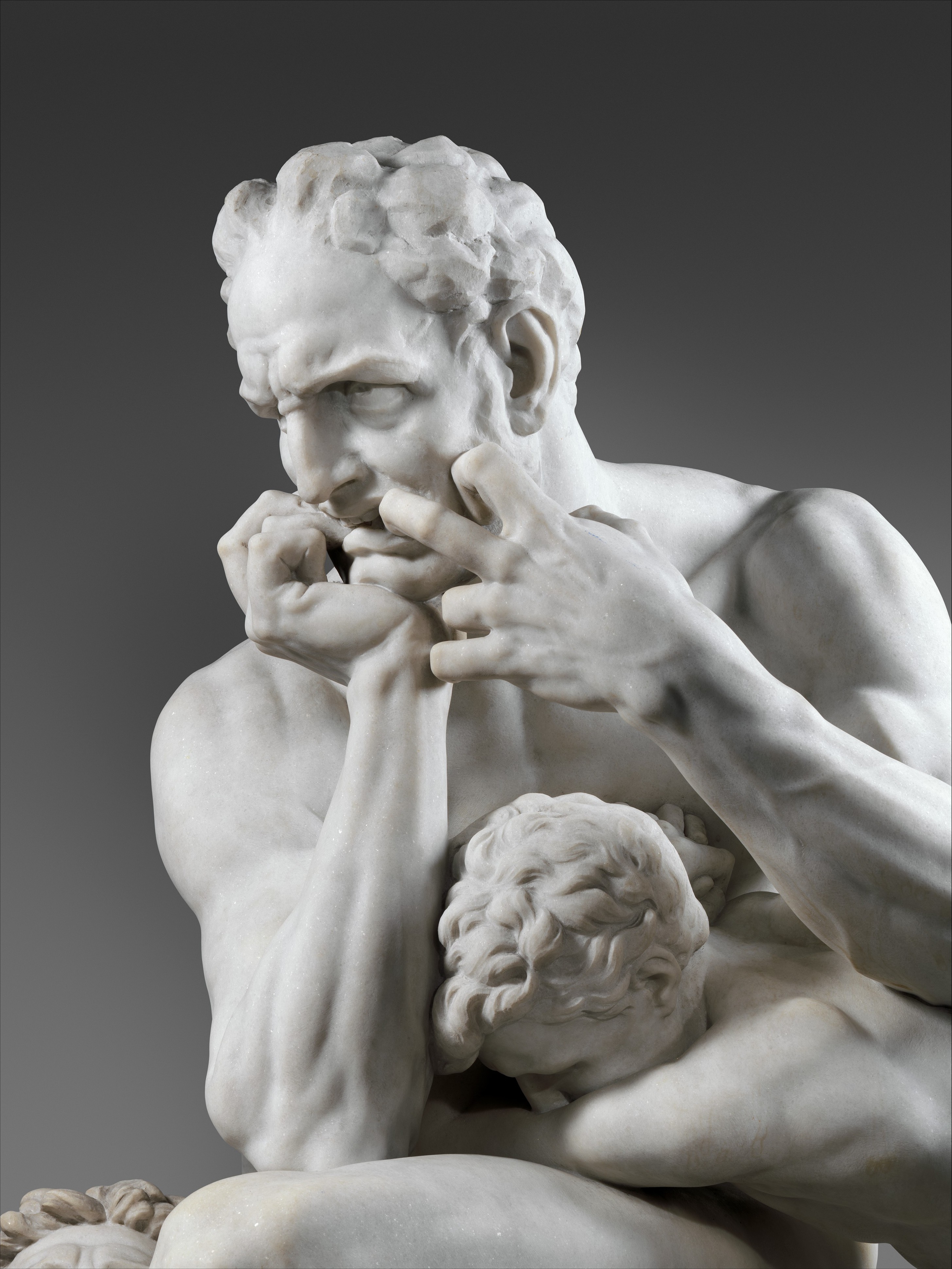
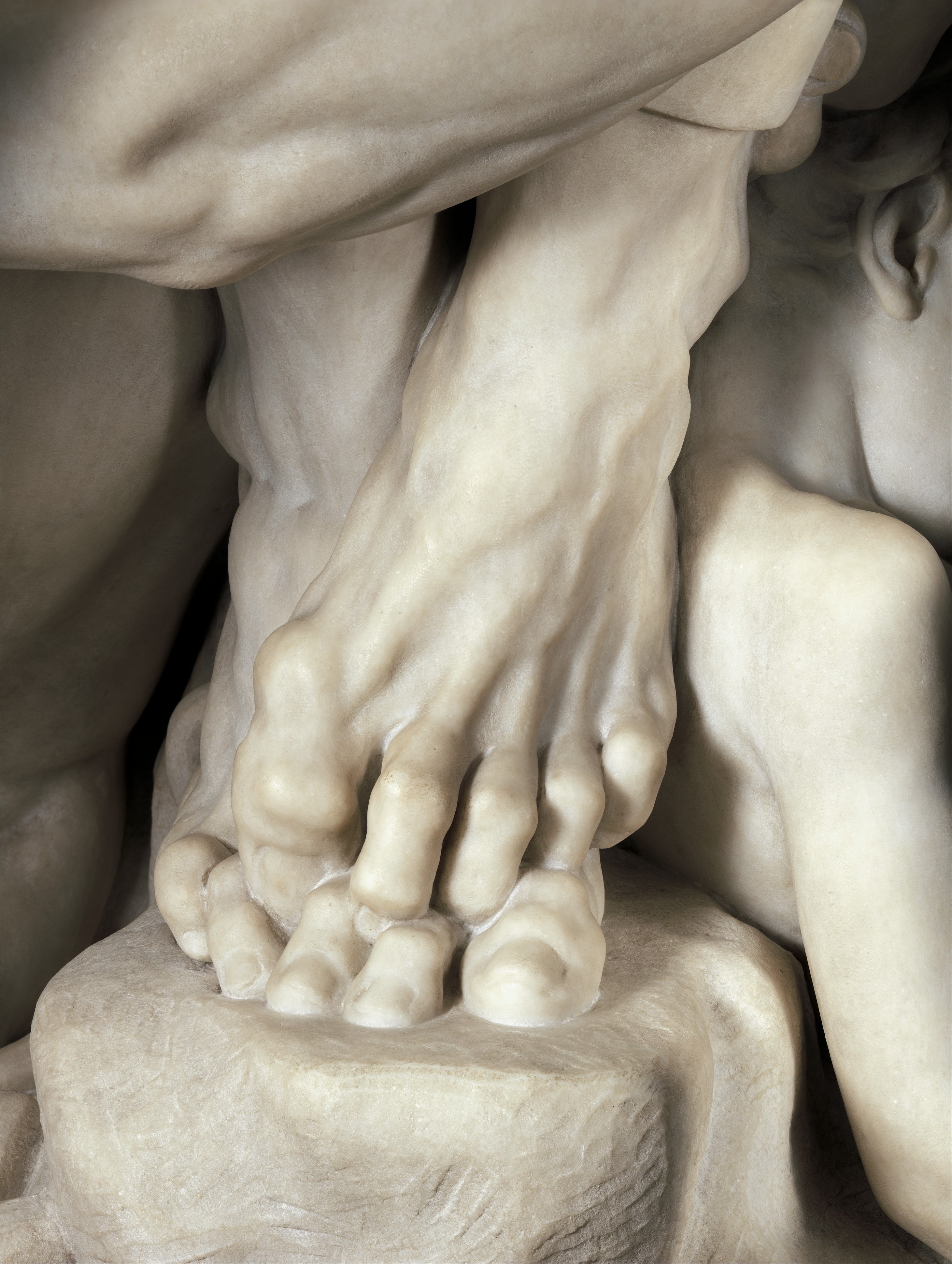
Ugolino and His Sons is a marble sculpture made by Jean-Baptiste Carpeaux in the 1860’s.

Carpeaux, Jean-Baptiste. Ugolino and His Sons. 1865-67. Marble. The Met, New York.

Count Ugolino of Donoratico was an Italian nobleman, politician and naval commander who was arrested for treachery in 1288, after killing Archbishop Ruggieri’s nephew. On the orders of the Archbishop; Ugolino, his two sons and two grandsons were locked away in the Torre dei Gualandi, where they would be left to starve after the keys to their cell were thrown into the Arno river. This story would later gain its fame from Canto XXXIII of Dante’s Inferno.

Dante’s version of hell was divided into nine different levels, placing both Ugolino and Ruggieri in the ice of the second from worst ring of hell; a place that was reserved for betrayers of kin, country, guests and benefactors. In Dante’s telling of the story, the reason that Ugolino was in this specific part of hell was because whilst they were starving to death, his children begged that he eat their bodies. In the story, Ugolino explained it by saying that “hunger had more power than even sorrow over me”, giving the impression that he consumed the flesh of his offspring; this is why he is often known as the ‘Cannibal Count’.

The fact that Carpeaux chose to depict a story from Dante’s Inferno was strange for the period; this was a bold departure from the more historical and biblical subject matter seen more frequently from the students of the Académie des Beaux-Arts. Whilst in preparation for this piece would look at the work of Michelangelo and sketch children as they were dying.

This particular version of the sculpture can be found at the Metropolitan Museum of Art in New York.