Throughout Picasso’s lifetime, the artist’s style was constantly evolving, although one of the most important phases of his career came after the death of his friend Carles Casagemas. This early stage of Picasso’s artistic development was so significant that he named it, the ‘blue period’ that would dominate his work for three years starting in 1901.
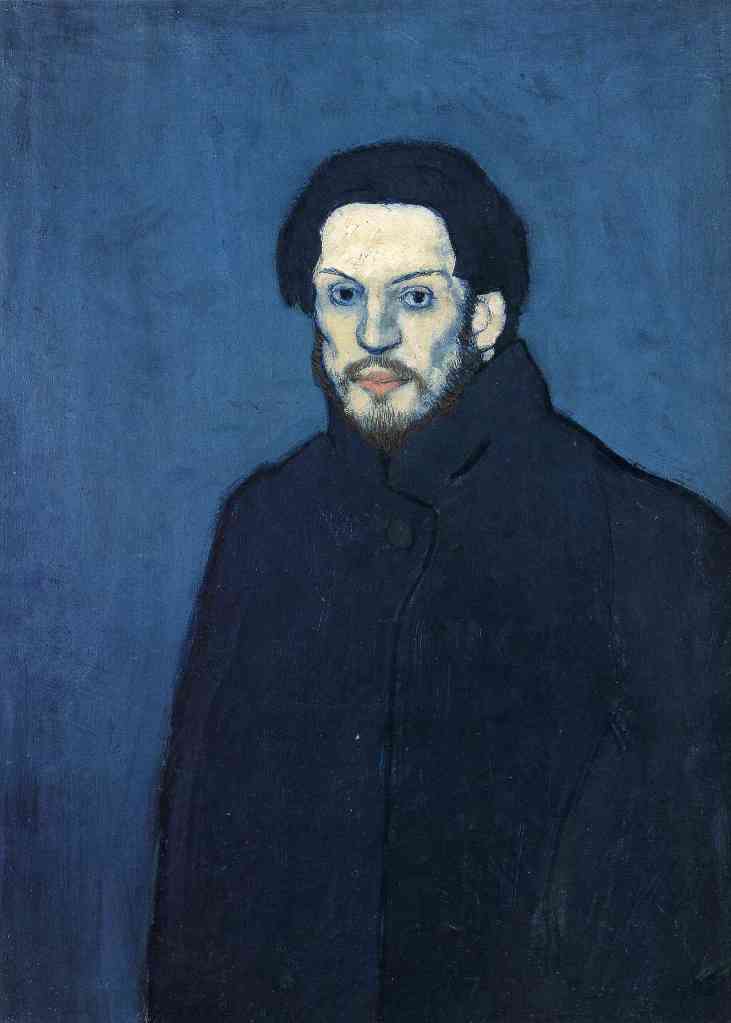
At the tender age of 19 years old Picasso moved to Paris, which would have been the centre of the art world at the time. He was accompanied by his friend Casagemas, who was an artist himself.
While in Paris, Casagemas would fall in love with a young woman called Germaine, although she did not feel the same. On February 17th 1901, while Picasso was in Barcelona; Casagemas hosted a party, inviting many of his friends as well as Germaine. That night he would deliver a speech before asking for Germaine’s hand in marriage. Germaine rejected his proposal which drove him to pull out a pistol, shooting her and then himself. Although Germaine survived the attack, it would result in the death of Casagemas and the start of Picasso’s blue period.
Picasso’s use of blue as a way of providing relief from the emotions he felt after the death of his friend in an extremely depressing way. Throughout this period he focused on several different subjects although they always focused on themes like disparity, loneliness, poverty, old age and death.
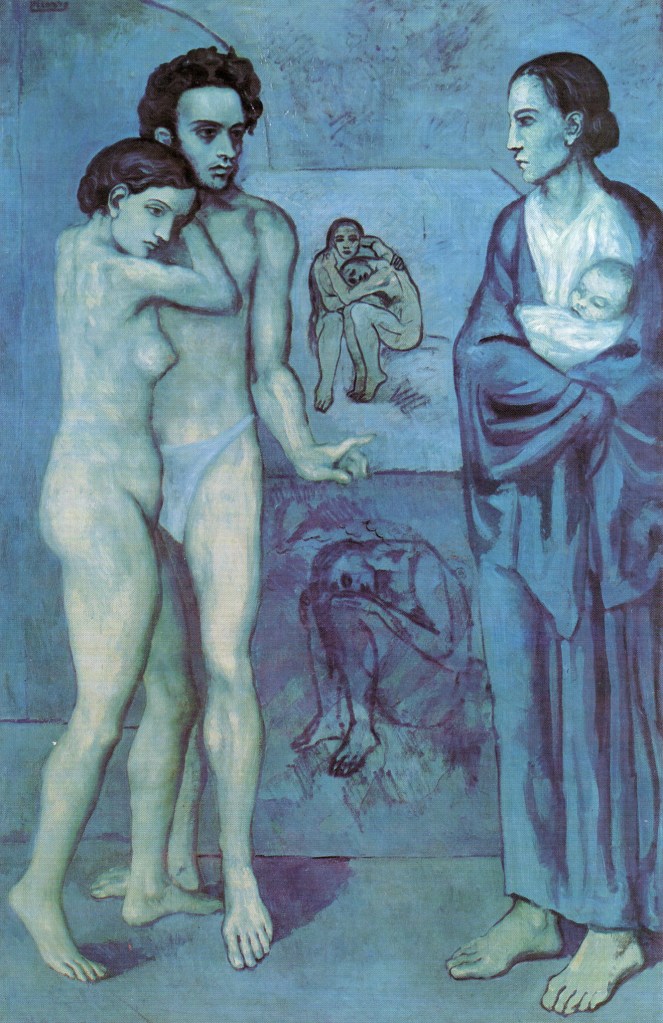
One of the artworks that are most significant in representing this period of Picasso’s career is La Vie (1903). This piece shows Casagemas and Germaine, naked and cuddling. If you look at Casagemas’ left hand you can see that he is doing a gesture; this gesture is a religious symbol that refers to a quote from Jesus Christ after his resurrection, ‘Noli me tangere’. This can be translated to ‘touch me not’ or ‘stop clinging to me’, which could be interpreted as the young man telling Picasso that it was time to move on with his life.
 SPIKE FRASER